
Skip to content
Together, nurturing every child’s potential · Trusted by families across India

When Your Child Struggles With Physical Coordination

Some children find hand-based tasks like holding a pencil, using scissors or buttoning a shirt harder than expected. Others struggle with bigger movements: running, jumping, climbing or keeping balance. Both fall under fine motor and gross motor skills, and a child can face difficulty with one, both, or neither in the way you'd expect.

Mom's Belief supports fine motor skills development and gross motor skills development through occupational therapy built around your child's current stage.

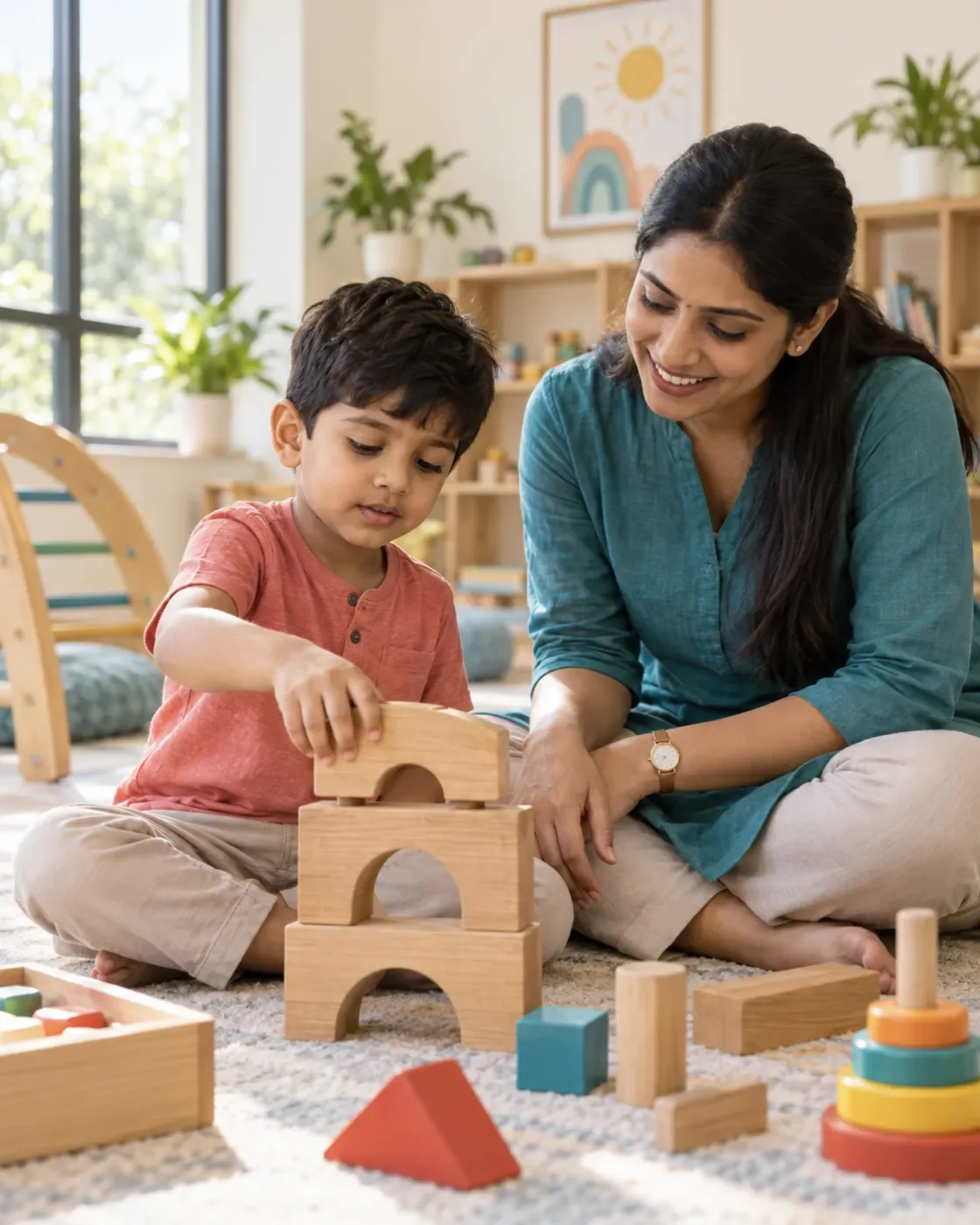
A child building with wooden blocks beside a supportive adult.

What Parents May Notice

You may notice that your child:

  • Has an unusual or tiring pencil grip, one of the earliest fine motor skills milestones

  • Struggles with buttons, zips or shoelaces

  • Avoids gross motor skills activities like running, climbing or ball games

  • Seems clumsy or trips more than other children their age

  • Has difficulty catching, throwing or kicking a ball

  • Tires quickly during physical play

  • Struggles with stairs, climbing or balance activities

By fine motor meaning, we're referring to small, precise hand and finger movements. Development gross motor skills involves larger, whole-body movements. A closer look helps clarify where your child's specific needs lie.

How We Can Help

Occupational Therapy

Occupational therapy at Mom's Belief works on fine motor and gross motor skills through structured, activity-based sessions. Therapists use visual motor integration exercises, activity analysis and motor planning tasks suited to your child's current age and stage, rather than a fixed program.

For younger children, this often starts with fine and gross motor development basics like grasp and core stability. As skills build, sessions move toward more complex gross motor skills activities and activities for fine and gross motor skills like writing and craft tasks.

Sessions are one-to-one, group or a mix of both, depending on what best supports skill-building and practice.

Parent Guidance

Therapists guide parents after every session on what to continue at home. Once a goal is close to mastered, generic, play-based home strategies are shared to help the skill generalise into daily activities like dressing, drawing or outdoor play.

Separate parent-interaction sessions are arranged by the Clinical Manager or Clinical Director. Parents can reach out with concerns between sessions.

Progress Looks Different for Every Child

There's no single timeline every child follows for motor skills to develop. Every child reaches fine motor skills milestones and gross motor skills definition benchmarks at their own pace.

Early on, families often notice better engagement in an activity and improved participation in fine-motor or self-care tasks. Later, this tends to shift toward greater independence in dressing, feeding and handwriting, and better participation in school-based physical activities.

Progress depends on several factors. These include consistency of sessions, how much practice continues at home, how closely the family follows the plan, and your child's individual pace. We share observations after every session, along with a formal progress report every three months.

At Mom's Belief, completing a motor activity isn't the goal on its own. The real aim is for your child to move, write and play with more confidence and independence in daily life.