
Skip to content
Together, nurturing every child’s potential · Trusted by families across India

When Big Emotions Turn Into Daily Challenges

Some children struggle to manage frustration, disappointment or overwhelm, and it shows up as frequent meltdowns, aggression or behaviour that's hard to understand or predict. This goes deeper than everyday behaviour support. Emotional regulation and challenging behaviour work looks specifically at behaviours driven by emotional dysregulation or difficulty coping.

Mom's Belief helps children build the skills to recognise, manage and express big emotions in healthier ways.

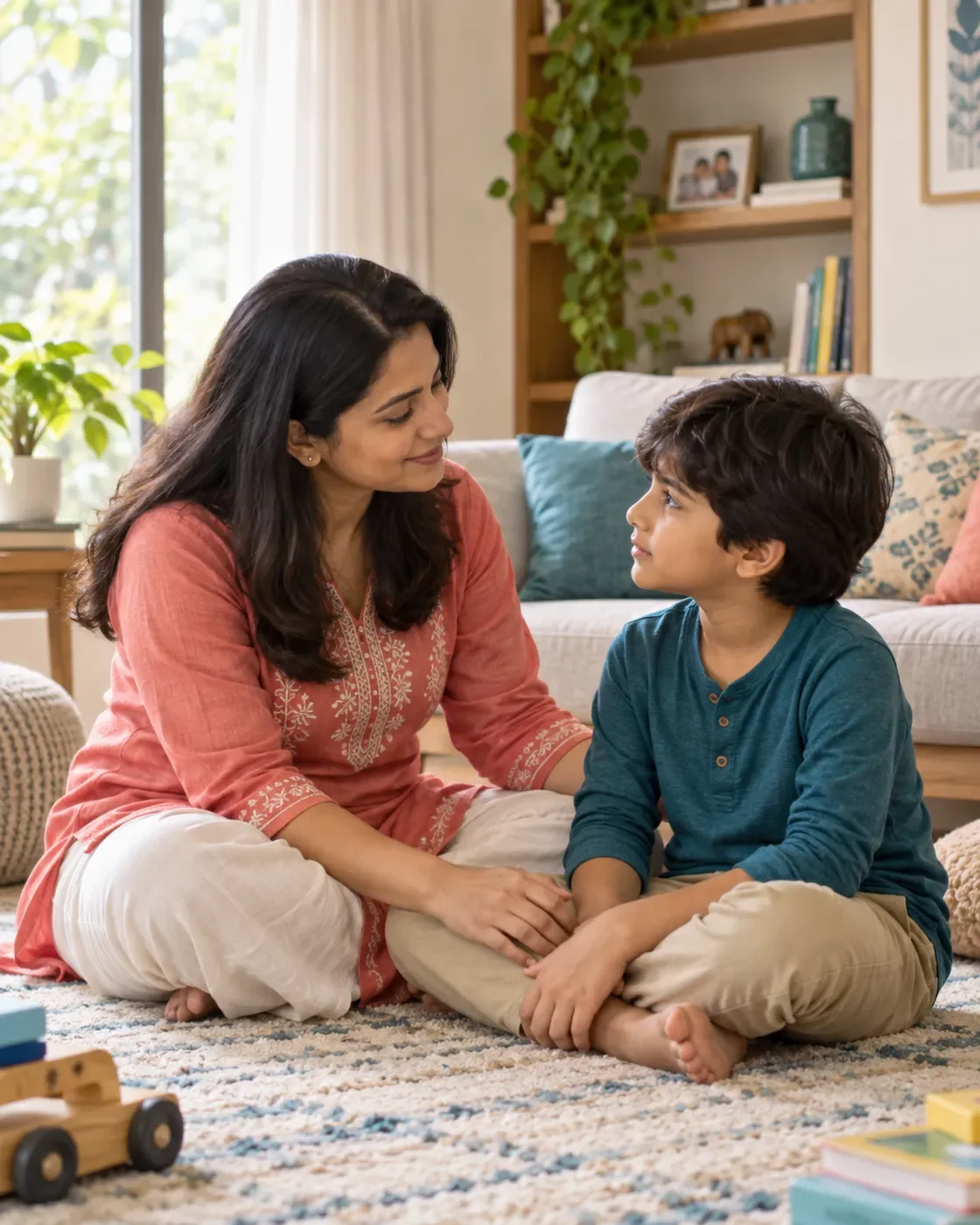
A parent listening calmly to a child while sitting together on a rug.

What Parents May Notice

You may notice that your child:

  • Has frequent or intense meltdowns

  • Struggles to calm down once upset

  • Reacts to small frustrations with a big response

  • Becomes aggressive or physical when overwhelmed

  • Has difficulty naming or explaining how they feel

  • Escalates quickly in situations that involve waiting or disappointment

  • Seems overwhelmed by emotions they can't yet manage

How We Can Help

Behaviour Therapy

At Mom's Belief, Behaviour Therapy is the umbrella approach, focused on understanding why a behaviour occurs and teaching more appropriate ways to respond. For emotional regulation and challenging behaviour, this goes further, working specifically with behaviours driven by emotional dysregulation, using ABA-based principles, positive reinforcement and individualised strategies.

Sessions are one-to-one, group or a mix of both, depending on what will help your child build and practise regulation skills.

Parent Guidance

Therapists guide parents after every session on what to continue at home. Once a goal is close to mastered, generic, play-based home strategies are shared so calming and coping skills generalise into real situations beyond the therapy room.

Separate parent-interaction sessions are arranged by the Clinical Manager or Clinical Director. Parents can reach out with concerns between sessions.

Progress Looks Different for Every Child

There's no single timeline for emotional regulation to develop.

Early on, families often notice a more consistent response to simple instructions and some reduction in the frequency or intensity of challenging behaviours. Later, this tends to shift toward better emotional regulation across settings and improved coping with change and frustration.

Progress depends on several factors. These include consistency of sessions, how much practice continues at home, how closely the family follows the plan, and your child's individual pace. We share observations after every session, along with a formal progress report every three months.

At Mom's Belief, reducing a behaviour in session isn't the goal on its own. The real aim is for your child to manage big emotions with more confidence across home, school and everyday life.