
Developmental Assessment
A developmental assessment helps us understand your child's communication alongside other areas of development. It gives the clinical team a clearer picture of their strengths and support needs.
You may notice that your child uses fewer words than other children their age, takes longer to respond or finds it difficult to tell you what they want.
Sometimes, a child may understand much of what is being said but have difficulty expressing themselves. Other children may have difficulty both understanding language and using it.
These differences can leave parents wondering whether they should wait or seek guidance. At Mom's Belief, we start by understanding how your child communicates today and what may be getting in the way.
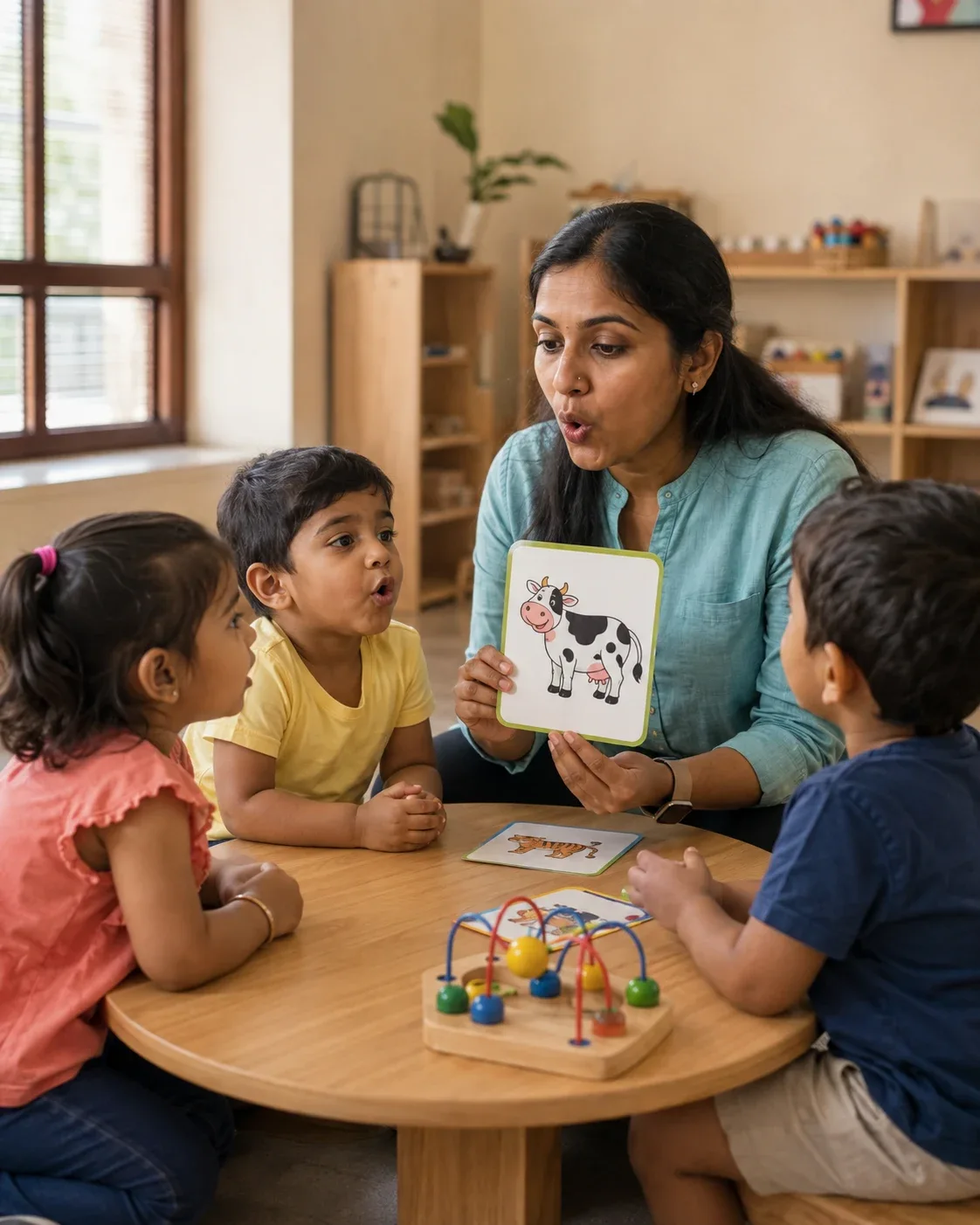
Speech is how a child produces sounds and words. Language is broader and includes how they understand what others say and how they use words, gestures or other forms of communication to express themselves.
A child may have difficulty in one area, or in several areas at the same time.
You may notice that your child:
Has limited babbling or vocalisations during infancy
Does not consistently respond to sounds or their name
Has limited eye contact or finds it difficult to engage in communication
Uses fewer words than expected for their age
Finds it difficult to combine words into phrases or sentences
Has difficulty following age-appropriate instructions
Struggles to understand questions or simple conversations
Finds it difficult to tell you what they want, need or feel
These signs can have different causes and may look different across children. A closer look at your child's overall development can help provide more clarity.
A developmental assessment helps us understand your child's communication alongside other areas of development. It gives the clinical team a clearer picture of their strengths and support needs.
Speech and language therapy focuses on the communication skills your child needs in everyday situations.
Depending on your child's profile, this may include building vocabulary, understanding language, combining words, answering questions or expressing needs.
Parents spend the most time with their child, so support should continue beyond the therapy session.
We guide parents on simple ways to create communication opportunities during play, meals, routines and everyday interactions.
If communication difficulties are affecting classroom participation, school readiness support may also be considered as part of your child's wider plan.
You don't need to compare your child with every other child their age to know when something feels different.
If you have concerns about your child's speech or expressive language, seeking guidance can help you understand where they are today and what support may be useful.