Understand you child's growth and development with standardised developmental assessment at just ₹499 Book your Slot Now
Introducing the School Readiness Program — designed to build focus, behaviour & learning skills for smooth school transitions. Enrol now

Online Programs

moms belief
Early Intervention

What is Early Intervention?

Early Intervention

Early Intervention is a specialized program designed to provide comprehensive support and services to babies and toddlers (from birth to 3 years old in most states/territories) who may be experiencing developmental delays. These services cover a range of areas such as speech and language, physical development, social skills, and more. By identifying and addressing developmental delays early on, Early Intervention aims to support skill development through early developmental intervention both in school and life. It’s a proactive approach aimed at reducing the risk of further neurodevelopmental disorders by intervening as early as possible.

  1. Effectiveness: Early intervention is generally recognised as beneficial when initiated at an early stage of a child’s development, as early childhood is associated with greater developmental adaptability.
  2. Enhancing opportunities for Development: Early Intervention supports developmental progress by addressing identified developmental delays at an early stage.
  3. Reduced Risk Factors: By targeting developmental delays early, Early Intervention works to reduce risk factors and enhance protective factors in a child’s life.
  4. Holistic Support: It provides holistic support covering physical, cognitive, behavioural, and emotional development, ensuring a well-rounded approach to each child’s needs.

What is Parental Guidance?

Parental Guidance

Parental Guidance is a program designed to empower parents in fostering the healthy development and well-being of their children at home.

Through this program, parents receive structured training and support in implementing clinical strategies and psychological methods to provide emotional support and assist their child in supporting skill development based on identified needs.

Parental Guidance recognises the critical role of parents in shaping their children’s development and aims to provide parents them with the tools and knowledge needed to navigate developmental challenges.

  1. Empowerment: Parents are empowered with the skills and techniques to support their child’s development and address any challenges they may face.
  2. Resilience Building: The program provides guidance to parents on supporting emotional regulation and coping strategies in children.
  3. Improved Relationships: By providing support and guidance, Parental Guidance fosters stronger parent-child relationships and enhances communication within the family.
  4. Comprehensive Support: The program provides support to parents in understanding assessments and addressing behavioural and developmental challenges at home.
Parental Guidance
Occupational Therapy

What is Occupational Therapy?

Occupational Therapy

Is child facing challenges like restlessness, sensory issues, or difficulty with fine motor skills? Occupational Therapy (OT) offers tailored solutions to help the child thrive.

From improving focus in the classroom to addressing sensory processing difficulties and enhancing motor skills, OT supports children to overcome obstacles across everyday environments. With personalised support, children are supported in developing functional skills relevant to home and school environments.

  1. Developmental Skills: Enhance self-care abilities and overall development.
  2. Fine Motor Skills: Improve writing, shoe-tying, buttoning, and pencil grip.
  3. Sensory Processing: Create a personalized sensory diet to manage challenges.
  4. Social Skills: Build friendships, communication, and nonverbal cues.
  5. Home and School Functionality: Enable better functioning in everyday life.

What is Speech & Language Therapy?

Speech & Language Therapy

Speech & Language Therapy is a specialised form of therapy aimed at addressing difficulties in communication, speech, and language development.

It involves interventions designed to improve speech delays, speech articulation, language comprehension and expression, as well as overall communication skills.

Speech-language therapists work with children of all ages who may experience challenges in these areas, offering tailored strategies and techniques to enhance their communication abilities.

  1. Improved Communication Skills: Helps individuals develop clearer speech, expand their vocabulary, and enhance their ability to express themselves effectively.
  2. Early Intervention: By identifying and addressing speech and language delays at an early stage, therapy supports the development of communication skills through structured intervention.
  3. Enhanced Social Interaction: Improved communication skills enable children to engage more confidently in social interactions, fostering stronger relationships and connections with others.
  4. Increased Independence: Effective communication support children to express their needs, thoughts, and emotions independently, leading to greater confidence.
  5. Accessibility and Convenience: Online speech and language therapy eliminates geographical barriers, allowing access from the comfort of home.
Speech & Language Therapy
E-Learning

What is E-Learning?

E-Learning

E-learning offers structured learning support for students facing learning difficulties. Its adaptable nature allows for tailored learning experiences, catering to individual learning styles and paces.

Through diverse digital modes, such as computers and tablets, students can access resources in a format that suits their needs, whether through visual aids, interactive exercises, or audio instructions. This flexibility fosters a supportive learning environment where students can engage with learning materials at their own pace and revisit challenging topics as needed.

  1. Tailored and Individualized Learning: Personalized learning experiences for each learner’s needs.
  2. Flexibility: Learning can happen anytime, anywhere, accommodating different schedules and preferences.
  3. High-Quality Content: E-learning platforms offer structured and curated educational content.
  4. Engagement: Gamified activities are designed to support engagement and retention of concepts and skills.
  5. Easy Accessibility and Flexibility: Resources are readily accessible for continuous learning.
  6. Promotes Diversity: Caters to diverse learning preferences and abilities.
  7. Recording & Accountability: E-therapeutic sessions offer transparency with recorded session reviews.

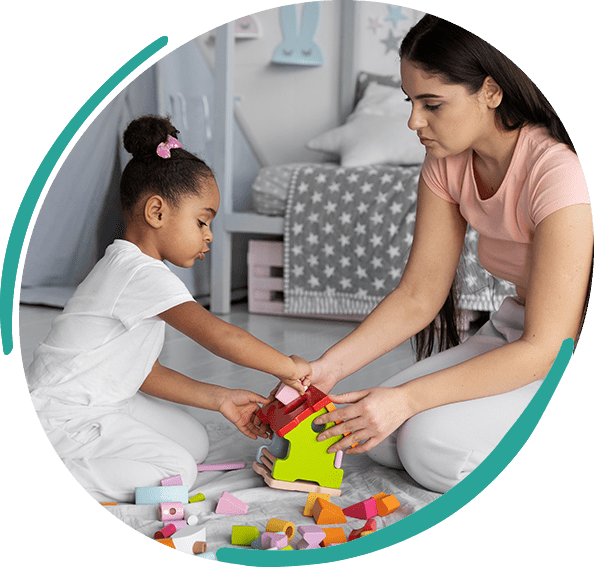
Family Support Program Learning Through Play

Empowering Families Through Play

We provide structured guidance, caregiver training, and personalized counselling, supporting parents in taking an active role in their child’s therapeutic journey .

The Family Support Program supports family engagement and communication through the use of customised Therapeutic Developmental Play Kits.

The program supports families of children with conditions such as Autism and ADHD, focusing on social-emotional and daily living skill development.

  1. Holistic Understanding: In-depth assessments offer insights into family dynamics and the child’s developmental history.
  2. Personalized Support: Receive a tailored family support plan to address strengths and challenges.
  3. Empowerment Through Training: Parents receive structured training to effectively support their child’s learning journey.
  4. Holistic Development: Play-based activities are designed to support developmental skills with therapeutic play kits.
  5. Emotional Support: Counselling sessions provide essential support for parents navigating their child’s development.
Empowering Families Through Play
Parent Testimonial

Positive Parents Review Of Us

Monotonectally conceptualize economically sound value after accurate growth strategies. Quickly parallel task client-centric materials technologies.

View All Reviews

Ask your Queries

CONTACTUS