


Every morning, a few nervous smiles walk in, and a few confident ones walk out.
That’s what a day at RISE by Mom’s Belief feels like. Behind every small routine and joyful giggle lies a thoughtfully designed environment that helps children learn the skills they’ll need for school, and for life.
Many parents wonder what happens inside a “school readiness program.” Is it like a preschool? A therapy centre? Or a mix of both? The answer: it’s a bridge between home and school, where play, therapy, and learning meet in the most natural way possible.
Here’s a look at what a typical day looks like.
1. The Morning Arrival: Comfort before learning
The day begins with warm hellos. Each child is greeted by name, often with a favourite song or a short sensory activity that helps them transition smoothly from home to the classroom.
For some children, separation can be difficult; therefore, this early part of the day focuses entirely on emotional regulation. Familiar faces, a predictable routine, and a comforting environment make all the difference.
Children learn to hang their bags, unpack snacks, and place their bottles, small acts that build early independence. These first 15 minutes quietly prepare them for routines they’ll follow later in school.
2. Circle Time: Social skills through shared moments
Once everyone settles in, it’s circle time, a lively session filled with songs, movement, and stories. What appears to be fun is actually structured social learning.
Children practice turn-taking, listening, maintaining eye contact, and following group instructions, all of which are crucial for classroom readiness. The facilitator encourages participation through gestures, visuals, and positive reinforcement.
For children who are shy or need support, the team uses gentle prompting and peer modelling. A child who hesitates to speak is invited to hold a puppet or choose the next song, using subtle ways to build engagement without pressure.
3. Skill Stations: Learning through play and therapy
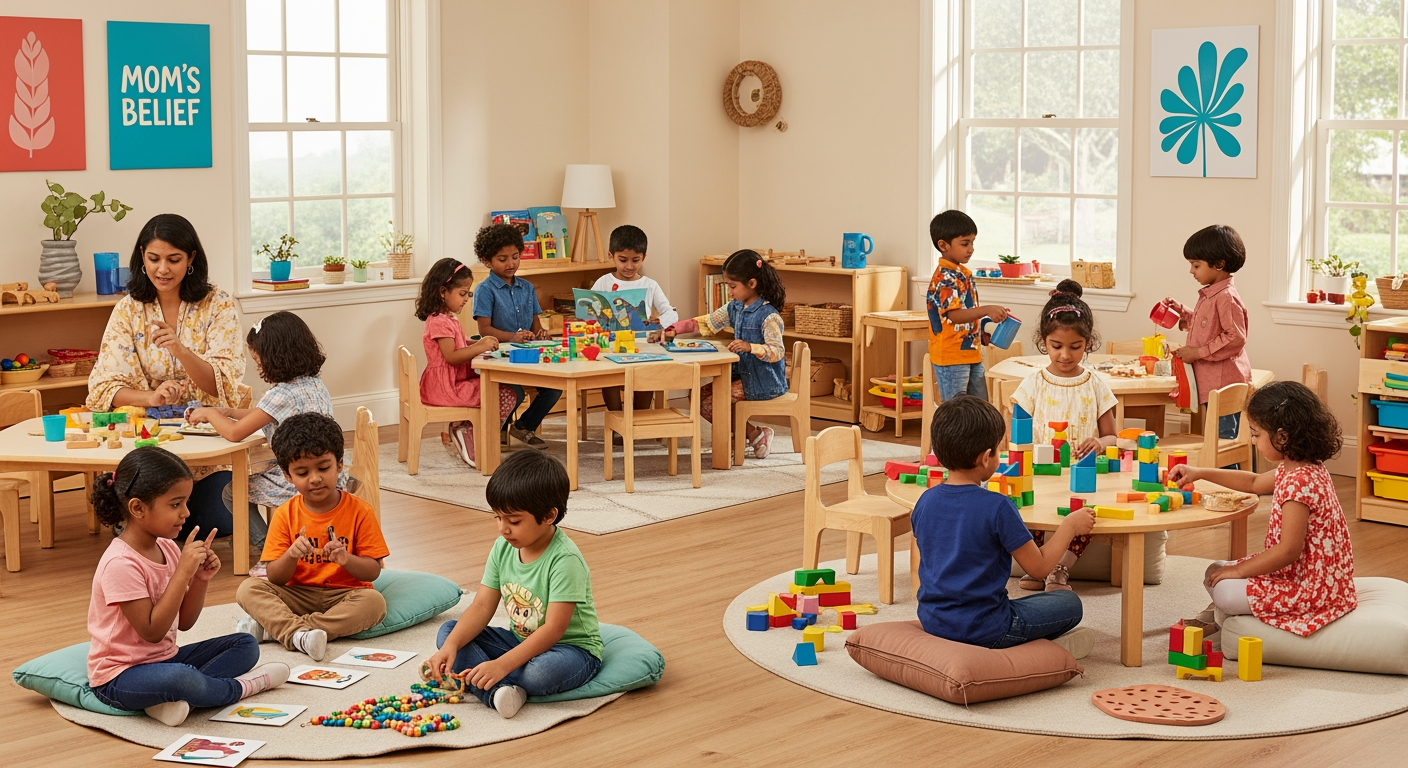
After circle time, children move into small skill-based stations, each designed to build one domain of readiness:
- Fine Motor Corner: Activities like stringing beads, colouring, or building blocks strengthen grip, coordination, and focus
- Language Station: Interactive games, object naming, and role play help children express ideas and understand others
- Sensory Play Area: Sand, water, textures, and balance tasks develop sensory regulation and body awareness
- Pre-Academic Zone: Matching, sorting, and early concept learning prepare them gently for future academics
What makes RISE unique is how therapy and education blend seamlessly. A speech therapist may sit beside an educator during story time; an occupational therapist may adjust a sensory task while the group plays. Every activity is purposeful, engaging, and child-specific.
4. Snack and Social Time: Everyday independence in action
Snack time might seem ordinary, but here it’s part of the learning plan.
Children open their boxes, pour water, and learn to request help politely. Staff encourage sharing, conversation, and cleanliness, practical skills that make school life smoother.
It’s also a perfect moment for language expansion. A therapist might prompt with, “What snack do you have today?” or “Can you pass me the spoon?” These interactions build confidence and social fluency.
By mid-morning, you can see children who once sat quietly now chatting, laughing, or waiting for turns, small signs of readiness unfolding naturally.
5. Activity Blocks: Imagination and movement
Late morning is devoted to creative and physical play. This could mean art time, free play with peers, or structured games that promote gross motor coordination, jumping, balancing, or obstacle courses.
These sessions help children build body control, teamwork, and problem-solving. Therapists observe how children manage transitions, share space, and recover from frustration using these insights to refine each child’s goals.
For instance, a child who struggles to shift between tasks might be given visual cues or countdowns. Another who gets overwhelmed in noisy play might have a brief sensory break before rejoining the group. The focus is always on progress, not perfection.
6. Wind-Down & Reflection: Building closure and calm
The last 15 minutes are calm and cosy. Children sit in a circle, sing goodbye songs, and talk about their favourite part of the day. This helps them reflect, recall events, and build memory sequencing, early cognitive skills that feed directly into storytelling and comprehension later on.
As parents arrive, facilitators share short updates, what the child enjoyed, a new word learned, and a skill mastered. Families leave knowing what to reinforce at home and feeling reassured that their child is in safe, capable hands.
7. Why this rhythm works
Every part of the day at Steps to School has a purpose. It balances structure with flexibility, the kind that nurtures learning while respecting each child’s pace.
Children who start anxious often become the ones running inside first. Those who resisted fine motor tasks begin colouring with pride. Progress isn’t rushed; it’s earned one small, meaningful step at a time.
Takeaway
A day at RISE is more than a schedule; it’s a system of care built on understanding, expertise, and play. Each minute contributes to emotional confidence, communication, and independence.
If you’d like to see how this approach works firsthand, visit your nearest Mom’s Belief centre and watch a class in action. Sometimes, seeing those little smiles at the end of the day says more than any report ever could.