




Understanding individual development without comparison
Comparing children development is something most parents never plan to do. It happens quietly, often without intention, in everyday moments that feel harmless at first.
At the park.
At birthday parties.
In classrooms.
During family gatherings.
You notice how other children speak, play, respond, or adapt. And without meaning to, a question forms in your mind.
Why does this feel different for my child?
This thought is rarely judgement. It is curiosity mixed with concern. And for many parents, it arrives with a sense of guilt for even noticing.
For many families, comparing children development becomes a quiet way to make sense of these early questions.
Why parents start comparing children development
Comparison usually begins with noticing, not criticism.
As children grow, expectations change. Social interactions become more complex. Routines become more structured. What once felt manageable or unimportant may begin to stand out in new environments.
Parents compare because they are searching for context. They want to understand what falls within a wide range of development and what might need additional support. Comparison becomes a way to organise uncertainty when answers are not immediately clear.
In this sense, comparing children development is less about other children and more about trying to understand one’s own.
The emotional weight of comparison
For many parents, comparison brings discomfort.
Some feel guilty for noticing differences. Others worry they are being unfair to their child. Many tell themselves to stop comparing altogether, only to find the thoughts returning in different situations.
What makes this stage emotionally heavy is not the difference itself.
It is the uncertainty around what the difference means.
Without clarity, comparison fills the gap. It becomes a way to search for reassurance, even when it does not always provide it.
Why comparison is not a parenting failure
Comparing children development does not mean a parent lacks acceptance or trust in their child. It means they are paying attention.
Parents are constantly trying to make sense of their child’s experiences. Comparison is one of the ways the human mind processes information when clarity is missing.
Trying to silence comparison without understanding it often leads to more frustration. Parents may feel conflicted, telling themselves they should not think this way, while still feeling unsure.
Recognising comparison as part of the process allows parents to respond with more kindness toward themselves.
Many parents begin this journey much earlier, often with a quiet feeling they cannot explain. You may find it helpful to read I Felt Something Was Different With My Child, which explores how early instincts often appear before parents fully understand what they are noticing.
In fact, comparing children development often reflects a parent’s effort to understand their child more clearly, not a lack of acceptance.
Shifting the question without dismissing it
Instead of repeatedly asking,
Why isn’t my child like other children?
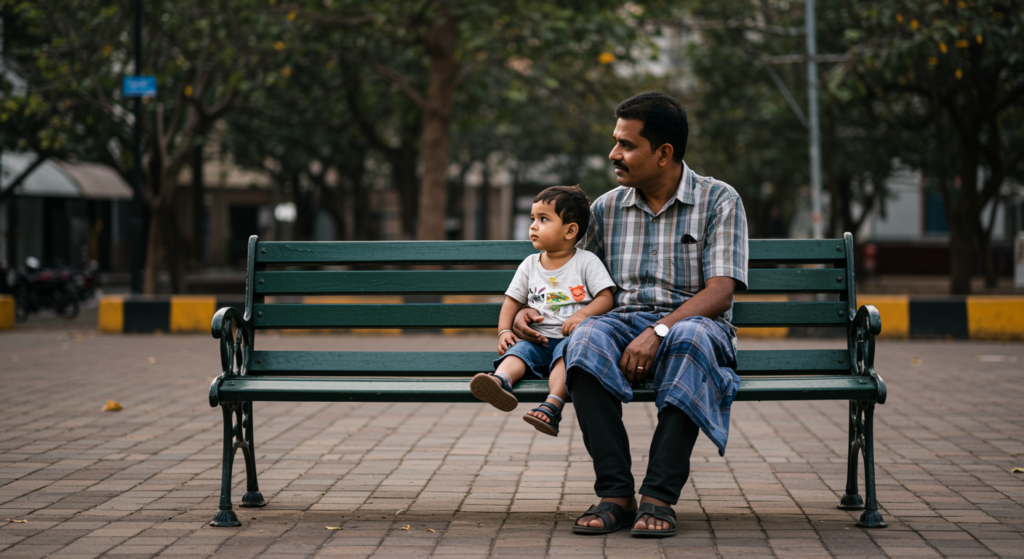
It can be more helpful to ask,
What does my child need to grow and feel supported?
This shift does not deny differences.
It reframes them.
By focusing on individual needs rather than comparisons, parents often find it easier to respond thoughtfully instead of reacting emotionally.
Understanding development beyond comparison
Every child develops through a unique combination of strengths, sensitivities, and experiences. Some children adapt easily to social expectations. Others need more time, guidance, or support to feel comfortable in similar situations.
Recognising this does not mean lowering expectations.
It means adjusting expectations with empathy and realism.
Understanding development on an individual level helps parents see progress that comparison often hides.
When comparison slowly loses its grip
As parents gain clarity about their child’s development, comparison often becomes less intense. Not because differences disappear, but because they feel less threatening.
Understanding replaces guessing.
Confidence replaces anxiety.
According to the Centers for Disease Control and Prevention, child development varies widely, and observing growth over time helps families understand what kind of support may be helpful at different stages.
https://www.cdc.gov/ncbddd/childdevelopment/index.html
A reminder worth holding onto
If you find yourself comparing children development, it does not mean you are failing at acceptance.
It means you are trying to understand something that matters deeply to you.
Your child does not need to be like other children.
They need to be understood as they are.
And understanding grows when parents allow themselves curiosity without judgement.